The Nigerian Freelancer's Complete Toolkit 2026: The Only 5 Apps You Need
Nigeria has 1.8 million active freelancers and a payment system that quietly skims off the top. Here are the five apps that cover the full picture: getting clients, managing work, and keeping what you earn.
Tolu finished a $600 brand identity project for a client in Manchester on a Thursday evening. The payment cleared into her Payoneer account by Saturday morning. By the time she withdrew to her GTBank account in naira, she had roughly $549. Payoneer charged a receiving fee, applied a conversion margin, and added a withdrawal charge. That is $51 lost, no dispute, no recourse, purely for collecting money she had already earned.
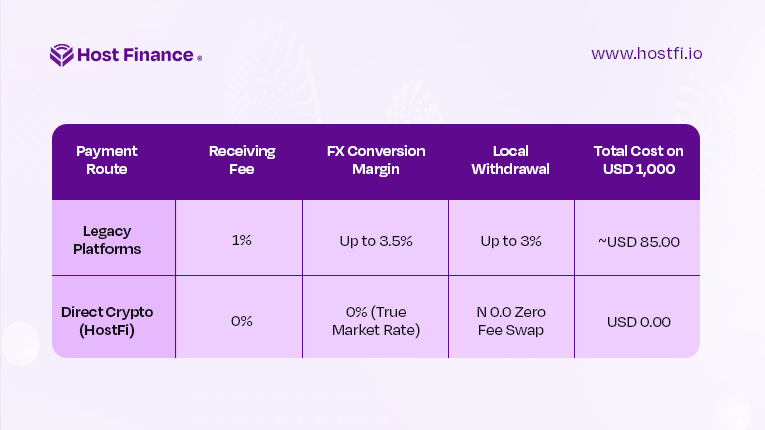
She is not an outlier. Payoneer's total fee stack sits at approximately 8.5% for Nigerian users once you account for receiving, currency conversion, and local withdrawal charges. On a $1,000 payment, that is $85 gone. A freelancer billing $3,000 monthly loses roughly $255 to fees every month before a single naira reaches their pocket.
Nigeria is Africa's largest freelance market, with over 1.8 million active freelancers generating approximately $3.4 billion in cross-border service exports annually. The global demand for Nigerian talent is real and growing. What the conversation around apps for Nigerian freelancers rarely addresses is everything surrounding the work itself — winning clients, presenting services, organising projects, and keeping what you earn. These five apps handle all of it.
1. Upwork — For Landing Clients Who Pay in Dollars
For most Nigerian freelancers targeting international work, Upwork remains the most credible starting point. The platform covers writing, design, development, marketing, financial consulting, and a wide range of other specialisations. Entry-level profiles earn $100 to $500 monthly with consistent effort; experienced freelancers with strong review histories regularly clear $1,000 and above.
- Companion Tool: Fiverr is a solid alternative for creatives offering packaged services. Graphic designers, video editors, and social media managers tend to gain traction on Fiverr for Nigerian freelancers faster than on Upwork because the gig structure eliminates the need to write custom proposals for each project.
Both platforms charge fixed commissions (Upwork up to 15%, Fiverr a flat 20%), and those are non-negotiable. The practical approach is to use them early for what they do well: building a credible review track record. Aim for five to 10 strong reviews, raise your rates incrementally, and start identifying your best clients as candidates for a direct working relationship.
2. Canva — For Looking the Part
Most Nigerian digital creators underestimate how much visual presentation shapes a client's first impression. Canva handles this without requiring any formal design training.
The obvious applications are client-facing materials: proposals, pitch presentations, and social media content. The stronger case for freelancers is portfolio building. A writer, virtual assistant, or UX researcher presenting a clean, branded PDF portfolio looks considerably more credible to international clients than one whose work samples are scattered across old Drive links. Canva's portfolio templates make this achievable in an afternoon. The free Canva templates for freelancers also cover invoicing — a professionally designed invoice, with your logo and consistent branding, signals competence before the client reads a single line.
The free tier covers most needs. Canva Pro adds brand kits and a larger asset library, which is a sensible upgrade once your income is consistent.
3. Notion — For Running Your Freelance Practice With Actual Systems
There is a common version of freelancing where projects are tracked in WhatsApp messages, deadlines live in a person's head, and invoices go out in no particular order. Notion replaces all of that with one organised workspace.
The best starting point is the Notion freelance client tracker, a simple database where you log every client, their project status, deadlines, revision rounds, and payment history. The same workspace handles content calendars, project brief libraries, and reference files for client brand guidelines.
For Nigerian digital entrepreneurs managing multiple clients across time zones, having one central system reduces the disorganisation that leads to missed deadlines and strained client relationships. The template is free and takes roughly 30 minutes to configure.
4. Zoom — For Keeping Clients Long After the First Project
Winning a new client takes real effort. Retaining them is far cheaper, provided communication is handled well.
Zoom for Nigerian freelancers remains the standard for professional video calls with international clients, and the habits around it matter more than the tool itself. Always confirm time zones before scheduling. A client in New York booking a call for "9 AM Eastern," for example, means a 3:00 PM call in Lagos.
- Companion Tools: To assist with time zone management, Nigerian freelancers routinely rely on World Time Buddy to prevent scheduling errors. For day-to-day communication between calls, meanwhile, Slack is worth learning. Being active on a client's workspace builds the exact kind of familiarity that generates referrals.
5. HostFi — How Nigerian Freelancers Get Paid and Keep Their Payments
The platforms in sections one and two are where most Nigerian freelancers start. They are not, however, where the most successful ones stay. To stop surrendering a massive percentage of your income to platform commissions and withdrawal charges, you need a reliable Payoneer alternative in Nigeria. And that’s where HostFi, the most efficient crypto wallet for freelancers in Nigeria, comes in.
The Strategy: Unlocking Direct Payments
To utilise HostFi to its full potential, you must graduate from marketplace platforms and secure direct clients. Cold and warm outreach removes the middleman entirely. A well-researched LinkedIn message to a marketing director in Austin, Texas, or a personalised email to a UK startup whose job posting disappeared before it was filled, puts you in front of paying clients without anyone taking a 20% cut.
One method with a high conversion rate is identifying companies that recently removed a role on a job board, social media, or freelance platform. Email the relevant manager directly, reference the specific gap they were trying to fill, and offer to take it on. Targeted outreach performs significantly better than generic cold emails because the client's need is already confirmed. Most importantly, securing a direct client gives you full control over your payment terms.
Processing the Earnings
With a direct client, you dictate how the invoice is settled. To then receive payment from international clients in Nigeria without fees, invoicing in stablecoins is the modern standard. You simply ask the client to pay in digital dollars, and the funds land directly in your HostFi wallet. This way, you can securely receive USDT/USDC and avoid the delays and opaque fees of traditional wire transfers.
Furthermore, when you are ready to spend locally, HostFi also functions as the best crypto payment app for Nigerian freelancers. The platform allows you to swap USDT to naira at the true market rate with no fees. Executing a zero-fee crypto swap in Nigeria means you do not lose a single kobo to conversion margins. From there, the process of withdrawing your earnings to GTBank, Zenith, Moniepoint, or any other local bank can be completed in minutes. And what you invoice is exactly what you receive.
The app also provides a virtual dollar card that Nigerian professionals can use to maintain their international software subscriptions, such as Adobe or a premium Zoom account, without the friction of opening a traditional domiciliary account.
One more angle worth understanding: under the Nigeria Tax Act 2025, effective January 2026, Nigerian freelancers are formally within the personal income tax net. Holding earnings in USDC until you need the naira means you convert on your own schedule at the parallel market rate, and every naira saved on fees and exchange margins is a naira available for a proper tax provision.
A Final Word
Nigerian freelancers who are building sustainable practices in 2026 tend to share one thing: solid systems behind them. Upwork or Fiverr to get in front of paying international clients for the first time. Canva to present work that converts. Notion to keep everything organised and nothing missed. Zoom and Slack to manage client relationships across time zones. And HostFi to receive international payments in Nigeria without surrendering a cut on every invoice.
The tools exist. The billion-dollar question is whether you are using them.