The Expat & Freelancer's Guide to Building Wealth with Stablecoins
If you save $100 and it earns 5% in a year, you end up with $105. In the second year, that 5% applies to $105, not the original $100, so you earn a little more than before. Repeat that every month or every year, and the growth curve stops being a straight line. It bends upward.

In Nairobi, a content creator named James Mumo remembers exactly when stablecoins stopped feeling abstract. A European brand wanted to pay him for a video collaboration in digital dollars. He had never heard the term before, so he looked into it, shared a wallet address, and watched the payment land within minutes. He told Binance in a recent interview that he now pays his video editor the same way every two weeks, without losing a cut to bank fees.
Stories like his are becoming common across the Global South. For freelancers and expats who earn in one currency but live, save, and spend across borders, the humble expat crypto wallet has quickly become one of the more useful tools in modern finance. While it is not a way to ‘get rich overnight’, it surely is a way to protect the money you already earn, and to let it grow steadily instead of shrinking against inflation.
What a Stablecoin Actually Is
A stablecoin is a digital token designed to hold a steady value, usually $1. Unlike Bitcoin, whose price swings by the hour, coins such as USDT and USDC are backed by reserves of cash and short-term US Treasuries, so one coin should always be worth close to $1. That stability is the whole point. A freelancer in Lagos or an expat in Lisbon can hold digital dollars in a phone-based wallet without watching the balance swing like a trading chart. That same appeal draws in digital nomads, whose income and home address rarely sit in the same country for long.
Under the GENIUS Act, signed into US law in July 2025, stablecoin issuers must now back every coin on at least a 1:1 basis with cash or safe assets such as Treasury bills, and disclose the makeup of those reserves monthly. It is the closest thing stablecoins have had to a rulebook, and it is one reason more people feel comfortable treating them as savings rather than trading chips.
Why Emerging Markets Are Leading This Shift
According to data cited by Binance, 73% of global stablecoin savers are based in emerging markets, and 36% of Binance users in those regions keep at least half their portfolio in stablecoins. Goldman Sachs' Global Institute puts the figure even higher for total supply, estimating that individuals in emerging markets hold around 66% of the roughly $290 billion in stablecoins currently in circulation.
The reasons are practical. In many countries, local currencies lose value faster than wages rise, and a US dollar bank account is either restricted or simply unavailable. Stablecoins fill that gap with something close to a dollar-backed savings account that needs no US address and no Wall Street brokerage. As Indian crypto educator Kashif Raza told Binance, learning about stablecoins matters "not to make money, but for your own survival."
Remittances are quite similar too. Global remittance volumes have more than doubled since 2010, reaching an estimated $892 billion a year, and eight of the 10 largest recipient countries sit in the emerging markets. Traditional transfer services often charge between 5% and 10% in fees. A stablecoin transfer can settle in minutes for a fraction of that cost.
The Power of Compounding, Explained Simply
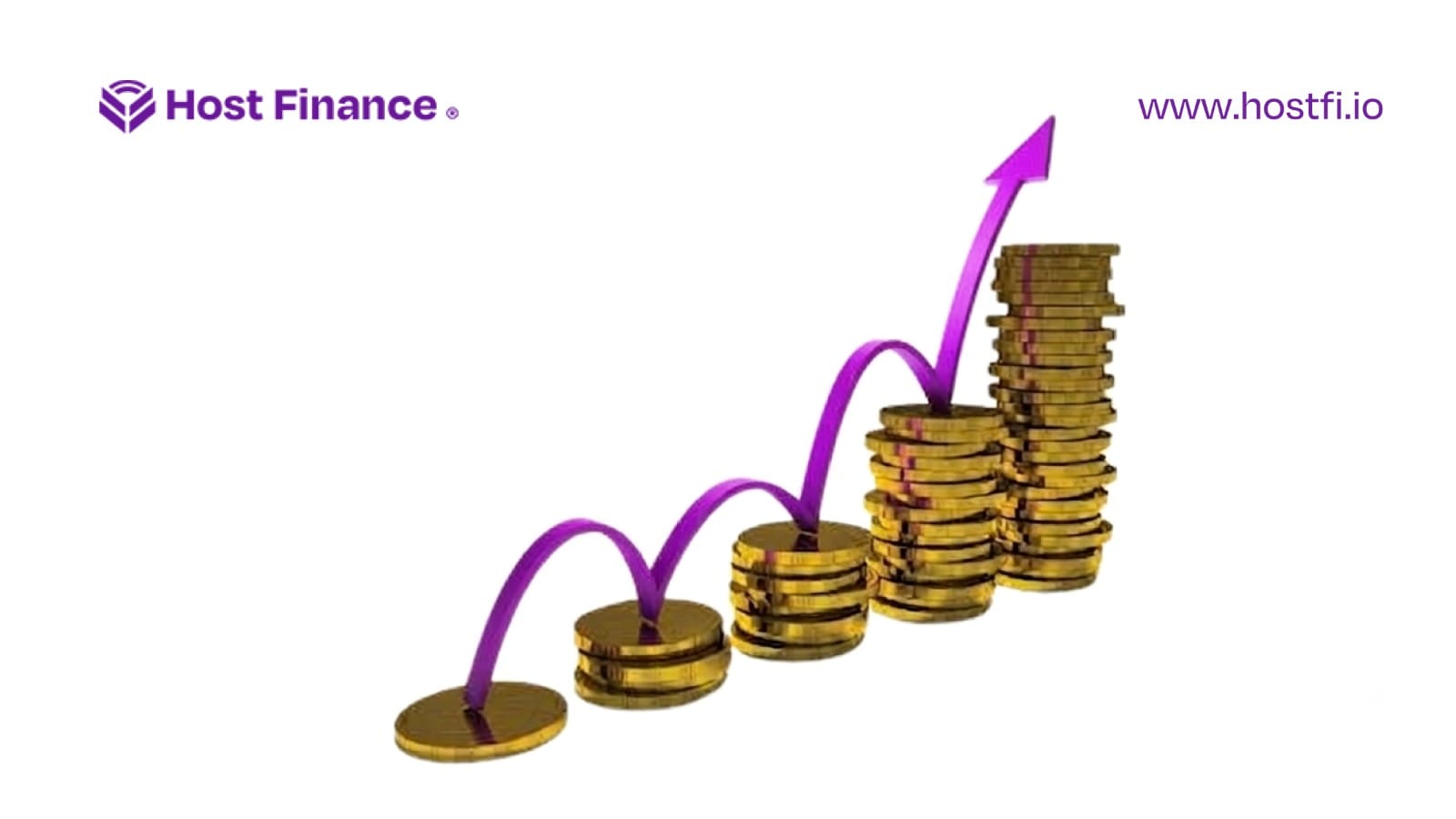
Saving in stablecoins solves one problem, which is protecting the value of money you already have. Compounding solves a different one: growing that money over time.
Here is the basic idea. If you save $100 and it earns 5% in a year, you end up with $105. In the second year, that 5% applies to $105, not the original $100, so you earn a little more than before. Repeat that every month or every year, and the growth curve stops being a straight line. It bends upward. Albert Einstein reportedly called compounding one of the most powerful forces in finance, and while nobody can verify he actually said it, the mathematics behind the idea is real.
That is the basic idea behind crypto savings for freelancers: modest, steady growth instead of money sitting idle in a low-interest current account. A freelancer who sets aside $200 a month, earning a modest return rather than none at all, ends up with meaningfully more after five years than someone holding the same cash under a mattress, or worse, watching it lose value to inflation.
What Yield Actually Costs You
High-yield stablecoin savings products exist across both centralised platforms and decentralised protocols. Some let you hold a balance in what amounts to a USDC savings account or a USDT interest account, and the advertised annual returns in 2026 have generally ranged between roughly 3% and 9%, depending on the platform and how much risk a saver is willing to accept. Rates, however, move with market demand, and every extra percentage point of yield usually comes with an extra layer of risk, whether that is a smart contract, a custodian, or a country's regulatory stance.
The clearest reminder of that risk came in March 2023, when USDC briefly lost its dollar peg after its issuer disclosed exposure to the collapsed Silicon Valley Bank. The coin recovered within days, but the episode was a useful lesson that a dollar-pegged coin is only as reliable as what backs it. Reading how a platform holds its reserves, and how quickly you can withdraw, therefore, matters more than chasing the highest headline rate.
Where This Leaves You
For you, a freelancer juggling clients in three currencies, a merely curious reader, or an expat trying to protect a decade of savings from a currency that keeps sliding, stablecoins offer something traditional banking in many countries still cannot: a borderless savings account that settles quickly and can start earning modestly from the day it lands. Wallets built for that kind of life are increasingly taking the next step to turn a static digital dollar balance into one that continues to grow in the background.
The tools are still young, and the rules around them are still being written. But for millions of people already living the borderless, freelance, dollar-hungry reality that stablecoins were built for, the maths of compounding is no longer theoretical.