Crypto P2P vs. Direct Wallets: The Future of Remittances in Emerging Markets
In February 2021, the Central Bank of Nigeria ordered banks to close any account linked to cryptocurrency. The move was meant to curb money laundering and consumer risk. Instead, it pushed an entire market underground.

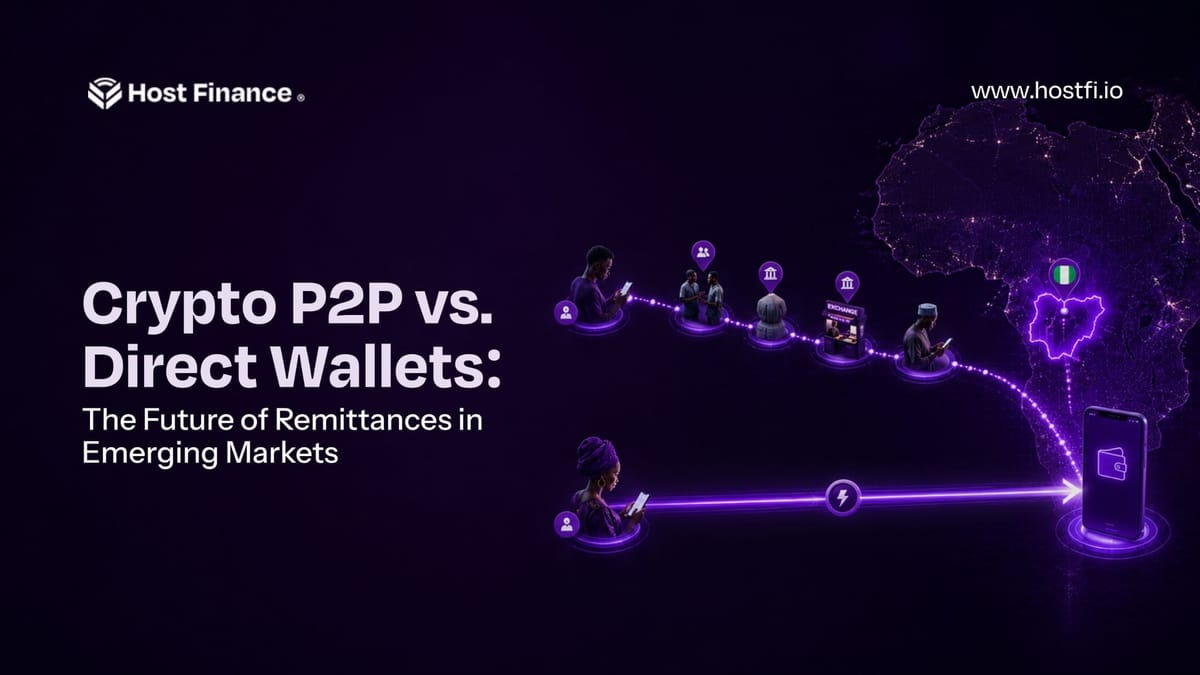
Ask anyone who has moved money through a peer-to-peer crypto marketplace in Lagos, Nairobi, or Buenos Aires, and they will tell you the same thing. The trade itself takes seconds. The waiting takes forever.
This is the paradox at the centre of the crypto P2P vs direct wallet debate now playing out across emerging markets. Peer-to-peer trading solved a real problem: it gave people in countries with unstable currencies and unreliable banking a way to hold and move digital dollars. But it solved that problem by handing control of the transaction to a stranger, and strangers do not always behave on schedule.
Nigeria is the clearest case study. In February 2021, the Central Bank of Nigeria ordered banks to close any account linked to cryptocurrency. The move was meant to curb money laundering and consumer risk. Instead, it pushed an entire market underground. Traders shifted to P2P platforms and escrow-based exchanges almost overnight, and by mid-2021 Nigeria ranked among the top three countries in the world for P2P bitcoin trading. The ban did not stop crypto use. It just removed the banks from the picture and left ordinary users to sort out the rest themselves.
Nearly five years later, the picture has changed again. Nigeria lifted its banking restriction in December 2023, and its Investments and Securities Act 2025 now formally recognises digital assets as securities. Crypto profits are taxed under personal income tax rules, at rates that can reach 25%. What was once prohibited is now regulated, reported, and taxed. Yet the everyday friction of P2P trading has not disappeared with the ban.
The Anxiety of the Escrow
The core mechanic of P2P trading is simple. A buyer and seller agree a price, the platform holds the crypto in escrow, and the seller releases it once payment lands. In theory, this protects both sides. In practice, it means every trade hinges on a bank transfer that neither party fully controls.
Anyone who has used these platforms knows the feeling of releasing digital dollars and then watching a banking app for a naira deposit that has not arrived. Was the transfer delayed by a public holiday? Did the merchant log off? Is the money simply stuck somewhere between two banks that do not talk to each other quickly? None of this is a flaw a platform can patch. It is what happens when a currency conversion depends on a person rather than a system.
A direct-to-consumer wallet removes that dependency by routing fiat on-ramp and off-ramp activity through established banking rails instead of a peer's personal account. There is no counterparty to wait on, and no escrow window to sit inside refreshing a screen. For anyone weighing the disadvantages of P2P crypto trading against the alternative, this is usually the first one they name.
The Rate You Never See
P2P trading rarely advertises a fee, which is part of why people assume it is free. It is not. Merchants build their margin into the exchange rate itself, which is a form of crypto exchange rate spread that many users never notice until they compare prices across platforms. A rate that looks reasonable in isolation can often cost a user three to eight percent once it is measured against the market price. For someone converting a small remittance or a freelance payment every week, that spread adds up fast.
Zero-fee crypto swap features inside a direct wallet solve this by showing users the real-time rate up front. There is no merchant setting the price and no need to shop around five different sellers hoping to find the least unfavourable spread. The rate shown is the rate paid, which is a small thing that changes how much someone actually keeps at the end of the month.
When the Bank Starts Watching
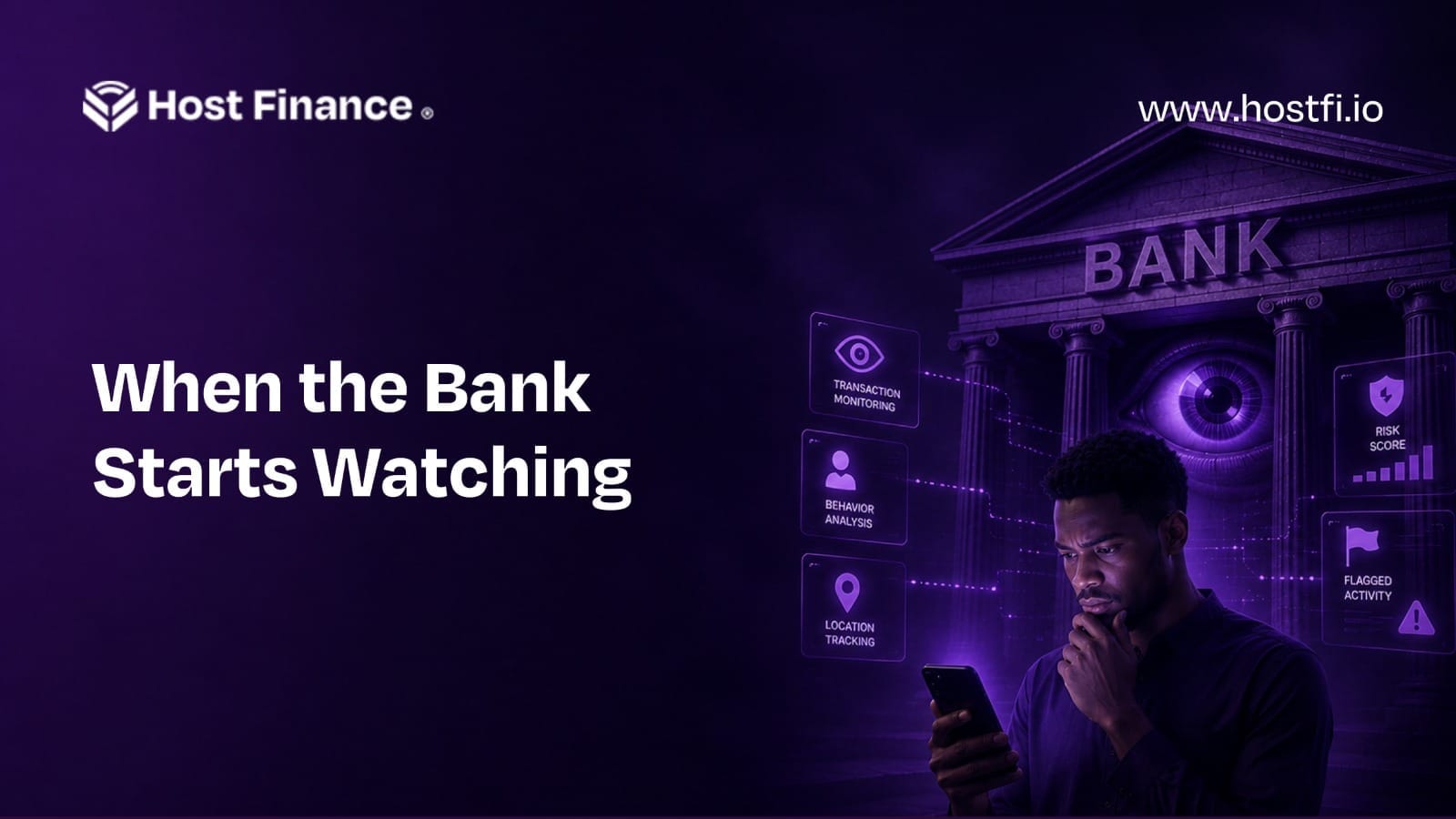
There is a second cost to P2P trading that has little to do with rates: the risk it poses to a person's own bank account. Traditional banks run automated systems that flag transactions with irregular senders or unusual frequency, and P2P trading tends to look exactly like the kind of activity those systems are built to catch. This is the reality of bank account freeze crypto trading exposure. A user doing nothing wrong can still end up locked out of their own account while a bank asks questions about a transfer from someone they have never met.
Nigeria's own regulatory shift shows how seriously authorities now take this kind of scrutiny. Under the country's newer tax and reporting rules, virtual asset service providers must submit monthly transaction reports to the Nigeria Revenue Service, covering transaction types, values, and counterparties. That level of formal oversight sits awkwardly next to informal peer-to-peer trading, where the counterparty is often just a username.
Fiat on-ramp/off-ramp crypto activity that runs through a licensed, regulated wallet avoids this friction almost entirely. Because the funds move through recognised financial infrastructure rather than an individual's account, they do not carry the same peer-to-peer banking suspicion that trips up so many P2P users. A Naira withdrawal crypto app built on proper banking rails can settle a payout without the sender ever becoming a red flag on someone else's compliance dashboard.
The Speed of Life
None of this would matter much if speed were not the whole point. A freelancer in, say, Accra needs a virtual card funded today, not after forty-five minutes of back-and-forth with a merchant over rates. A parent needs cash for groceries this afternoon, not once a stranger finally comes back online. This is the case for treating stablecoin remittance and instant crypto-to-cash conversion as basic financial infrastructure rather than a bonus feature.
A multi-currency crypto wallet that supports USDT and USDC alongside bitcoin, ether, and other major assets gives users one place to hold, swap, and spend without juggling several platforms. Add a global spending virtual card funded directly from that balance, and the gap between holding crypto and using crypto closes almost completely. And this is what a genuine direct-to-consumer crypto wallet is meant to do: turn digital dollars into something a person can actually live on and not just something they have to wait to convert.
Where This Leaves Emerging Markets
Nigeria's crypto story over the past five years is really a story about legitimacy catching up to demand. Sub-Saharan Africa was the third-fastest-growing crypto region globally between July 2024 and June 2025, according to Chainalysis, and Nigeria alone received over $92 billion in on-chain value in that period, nearly triple the amount recorded in South Africa. Much of that volume exists because currency devaluation and limited access to US dollars have made stablecoins genuinely useful, not just fashionable.
What Nigeria's regulators have learned, slowly and sometimes clumsily, is that banning a borderless financial app does not stop people from using it. It just pushes the activity somewhere harder to see. The countries now leading in crypto adoption are not necessarily the ones with the loosest rules. Rather, they are the ones building the infrastructure, licensed exchanges, transparent pricing, and direct fiat rails that let people use digital dollars without gambling on a stranger's goodwill or their own bank's patience.
For anyone searching for the best crypto wallet in emerging markets, or trying to work out the fastest way to cash out USDT in Nigeria, the answer now points away from P2P and toward wallets built to do the job properly the first time.