What Is Tap-to-Pay and How Does It Work? A Complete Guide
None of this rules out tap-to-pay in Nigeria. It simply means the country is earlier on the adoption curve than South Africa or Morocco, with infrastructure catching up piece by piece.
If you save $100 and it earns 5% in a year, you end up with $105. In the second year, that 5% applies to $105, not the original $100, so you earn a little more than before. Repeat that every month or every year, and the growth curve stops being a straight line. It bends upward.
It was not that Tunde had no money. He had spent two months earning USDT from clients in Europe, and that money sat untouched in a crypto wallet while he stood in a foreign airport unable to buy a cup of coffee. His naira account back home was tied to a quarterly travel allowance.
The saying "not your keys, not your coins" is practically gospel. But what that philosophy does not account for is what happens when the key holder is gone.
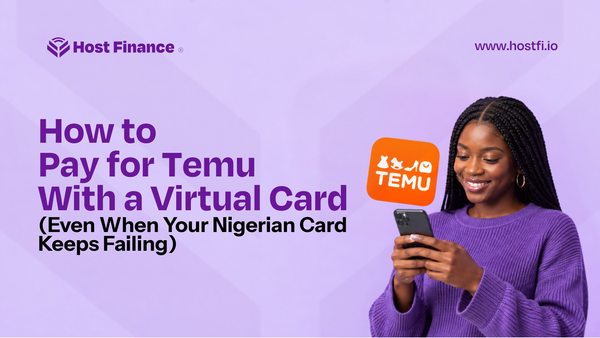
The HostFi naira virtual card works on several platforms, including X (formerly Twitter), Netflix, Spotify, Showmax, Boomplay/Audiomack, AliExpress, Jumia/Konga, Chowdeck, and Bolt/Uber, among others.
Crypto promised an exit. Permissionless, borderless, no intermediary taking a cut or freezing your account. The vision was compelling enough to attract trillions of dollars and a generation of developers. But for most ordinary people, that vision has remained frustratingly out of reach...
Tolu finished a $600 brand identity project for a client in Manchester on a Thursday evening. The payment cleared into her Payoneer account by Saturday morning. By the time she withdrew to her GTBank account in naira, she had roughly $549. Payoneer charged a receiving fee, applied a conversion margin,
When inflation outpaces bank interest rates, keeping money in a traditional savings account means bleeding purchasing power. Learn how millions of everyday earners across the Global South are abandoning the legacy financial system and turning to dollar-backed stablecoins to defend their wealth.
If you’ve tried sending Bitcoin lately and saw unusually high charges, you’re probably asking the same thing everyone else is: Why are Bitcoin fees so high right now? It’s easy to assume that high fees mean the network is overloaded but that’s not always true. Sometimes,
Bitcoin is no longer just for “tech bros” or “yahoo boys.” Today, everyday Nigerians like UNILAG student saving ₦10,000 a month to the mini-importer in Enugu are buying Bitcoin. Why? It gives them more stability and independence with their money. In a country where inflation weakens your savings and
Nigeria’s use of cryptocurrencies continues to grow steadily, leading Africa with an estimated 35 million active wallets. For Nigerians, digital currencies offer ways to protect savings from inflation, avoid restrictions in the banking system, send and receive money across borders, and make purchases worldwide. When it comes to managing
USDC to NGN conversions are becoming increasingly relevant in Nigeria as digital currencies gain traction in everyday transactions. From freelancers getting paid in crypto, to traders using stablecoins, to businesses accepting crypto payments, understanding how to convert USDC (USD Coin) to Nigerian Naira (NGN) is now essential. As of May