How to Travel Cashless With Crypto: A Guide to Contactless Payments Worldwide
It was not that Tunde had no money. He had spent two months earning USDT from clients in Europe, and that money sat untouched in a crypto wallet while he stood in a foreign airport unable to buy a cup of coffee. His naira account back home was tied to a quarterly travel allowance.

Tunde landed in Lisbon at half past six in the morning, jet-lagged and short on sleep, and the only thing on his mind was coffee. He tapped his Nigerian bank card against the reader. Declined. He tried again. Still declined. The barista pointed at a small sign listing the card networks the shop accepted, and his card was not among them.
It was not that Tunde had no money. He had spent two months earning USDT from clients in Europe, and that money sat untouched in a crypto wallet while he stood in a foreign airport unable to buy a cup of coffee. His naira account back home was tied to a quarterly travel allowance, and turning his crypto into spendable cash before the trip would have meant losing days to paperwork and fees.
Tunde's situation is familiar to anyone who earns or saves in crypto and still has to function inside a banking system built around cash and local currency. The good news is that this gap is closing fast. For freelancers, remote workers, and anyone who earns in cryptocurrency, travel no longer needs to be a logistical nightmare. By using a crypto-linked virtual card, you can make contactless payments by simply tapping your phone at the checkout just like you would with a regular debit card, and pay for hotels, meals, and transit abroad without ever needing to carry physical cash.
Why the Old Way of Funding Travel Is So Frustrating
For many Nigerians planning a trip abroad, the first stop is not the airport. It is the bank. Personal Travel Allowance is capped at $4,000 and Business Travel Allowance at $5,000 per quarter, and both come with conditions. The journey must usually involve a flight of more than five hours from Nigeria, the request must be made within 14 days of departure, and the applicant needs a valid passport, a Bank Verification Number, and a completed Form A. Short regional trips within West Africa are exempt from the allowance altogether, which means they typically do not qualify for it at all.
Even premium dollar accounts built for travellers carry their own costs. A UnionAce dollar account, for example, requires an opening balance of $100, caps daily card spending at $7,500 on point-of-sale transactions and $4,000 online, and still charges $10 a year just to keep the card active. Stanbic IBTC's 2026 pricing guide lists a similar $10 annual fee on foreign currency cards, plus a withdrawal commission of 0.05% of the transaction value or $10, whichever is lower, on domiciliary accounts. None of this is unusual. It is simply how the traditional system works, and it leaves everyday travellers paying fees just to access money that already belongs to them.
The Global Shift Toward Crypto-Funded Spending

This friction helps explain why so much of the world is turning to crypto as a practical financial tool rather than a speculative one. Chainalysis's 2025 Geography of Cryptocurrency Report found that Sub-Saharan Africa received more than $205 billion in on-chain value between July 2024 and June 2025, a year-on-year increase of 52%. Nigeria alone accounted for $92.1 billion of that figure, almost three times the volume recorded in South Africa, and ranks sixth globally on the report's crypto adoption index. Bitcoin already makes up 89% of fiat-to-crypto purchases in the country, while USDT has overtaken the US dollar itself as a share of local exchange activity, at 7% versus 5%.
The pattern repeats elsewhere. Latin America, where stablecoins now make up more than half of all exchange purchases in Argentina, Colombia, and Brazil, grew 63% year-on-year, driven by a mix of persistent inflation, currency volatility, and tight capital controls. Asia-Pacific grew even faster, at 69%, with India, Pakistan, Vietnam, Indonesia, and the Philippines all ranking among the top 10 countries worldwide for grassroots crypto adoption. In Pakistan, where remittances account for $35 billion of the economy each year, freelancers are increasingly paid directly in stablecoins. In Vietnam, the report frames crypto as having moved beyond speculation into everyday financial infrastructure, alongside remittances and savings.
How a Crypto-Funded Card Makes Tap to Pay Possible
For many Nigerians, paying with a card usually means handing it to a POS agent, watching them insert it into a small machine, typing in a PIN, and waiting for the machine to settle the transaction before cash or a receipt comes back. Tap to pay runs on a different idea altogether. The reader at a till abroad and a contactless card or phone both carry a small radio chip, and holding one within a couple of centimetres of the other finishes the payment in about a second, with no PIN entry and no queue at the machine. It is closer to waving a key fob at a sensor than feeding a card into a slot.
A borderless, multi-currency crypto card such as HostFi is built around that speed. Users fund a virtual card directly from naira, Bitcoin, USDT, USD Coin, Solana, or BNB, and the conversion into a spendable balance happens the moment the card is funded, not at the till, with no FX fees on the swap. That timing is what makes the system work. If a drink at a bar in Lisbon is priced in euros, the currency maths from Solana or USDT already happened when the card was funded. All that is left at the counter is the tap itself, a one-second motion finishing a payment that started out in an entirely different currency.
Setting the HostFi virtual card up for that tap takes one manual step: the card number, expiry date, and CVV are entered by hand into Apple Wallet or Samsung Pay. From there, paying works the same way from Tokyo to Toronto, since most countries today support contactless payments at the till. Additionally, with HostFi, there is no separate daily or monthly cap on contactless spending beyond the card's balance.
Crypto Card Versus Bank Card for Travel: What Actually Changes
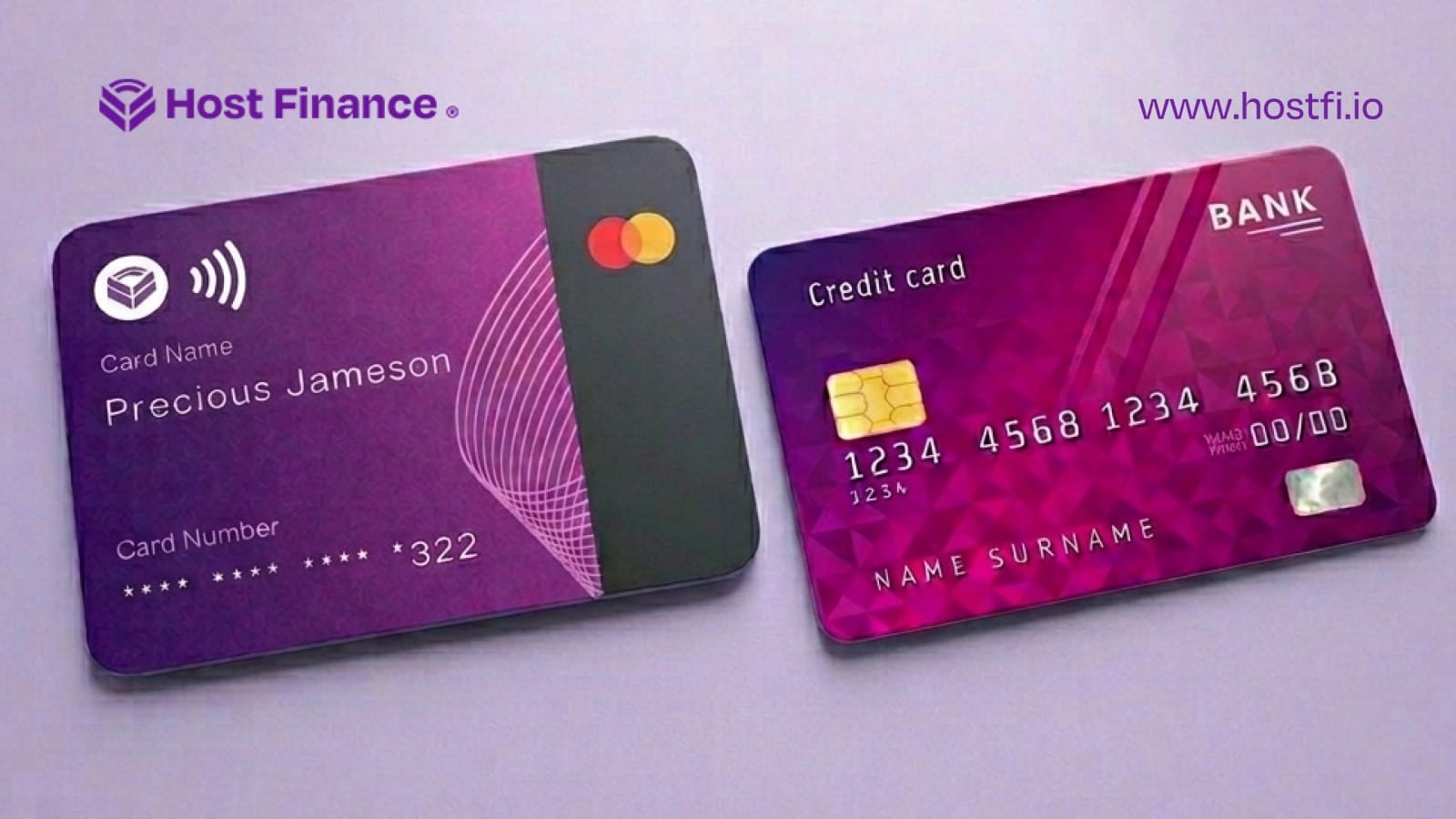
The difference between a crypto-funded virtual card and a traditional bank card for travel comes down to where the friction sits. A bank card ties spending to a quarterly allowance, a minimum balance, and a withdrawal commission that applies every time cash comes out. A crypto card ties spending to whatever balance sits in a wallet, with no quarterly limit and no swap fee at the point of funding, which suits freelancers and digital nomads who move between countries often. However, both still face the same basics of travelling with money, like carrying a backup payment method and knowing which countries still lean on cash.
Frequently Asked Questions
Can Nigerians travel cashless with HostFi?
Yes. Nigerian users can fund a HostFi virtual card directly from naira, Bitcoin, USDT, or other supported crypto balances, then use that card abroad through Apple Pay or Samsung Pay, without going through a bank's travel allowance process first.
Which cryptocurrencies can fund a HostFi travel card?
HostFi supports Bitcoin, USDT, USD Coin, Solana, BNB, and Ethereum, alongside naira. Conversion to a spendable balance happens at the point of funding, with no swap fee charged.
Do I need to add my card to Apple Pay or Samsung Pay manually?
Yes, for now. There is no direct "Add to Wallet" button inside the HostFi app, so the card number, expiry date, and CVV must be entered manually into Apple Wallet or Samsung Pay.
Is a crypto card better than a bank card for travel?
It depends on what is being compared. A crypto card removes quarterly allowance limits and swap fees, since the conversion from crypto to spendable balance happens the moment the card is funded, well before any payment is made. A bank card can still be worth carrying as a backup, since some hotels and car rental desks expect a physical card on file, and not every till abroad is fitted with a contactless reader yet.